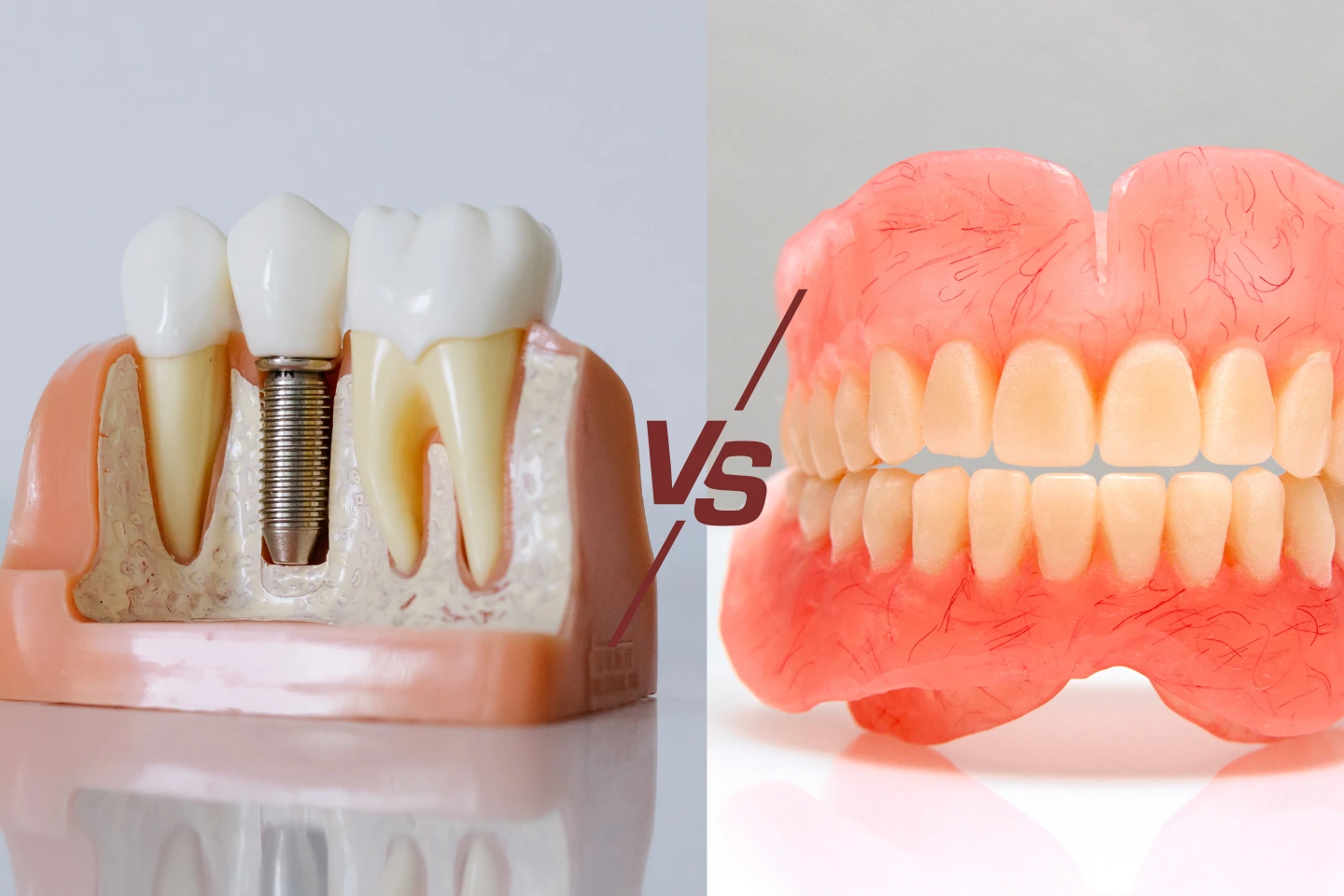
Replacing missing teeth is essential for proper chewing, speech, facial support, and overall confidence. Two of the most common treatment options are dental implants and dentures. While both restore function and appearance, they differ significantly in stability, comfort, longevity, and scientific predictability.
At Innovative Implantium, dental implant treatment is planned with advanced digital technology, AI-supported CBCT analysis, and biomechanically guided protocols under the care of Dr. Shyam Sundar. This scientific approach ensures precise, long-lasting, and patient-specific outcomes. Understanding the differences between implants and dentures will help you make an informed decision.
What Are Dental Implants
Dental implants are titanium or ceramic fixtures placed into the jawbone to replace missing tooth roots. Once the implant integrates with the bone through osseointegration, a crown, bridge, or full arch prosthesis is attached. This creates a stable and natural replacement that closely mimics real teeth.
At Innovative Implantium, every implant is planned prosthetically first. This means the final tooth design guides the surgical placement. AI-assisted CBCT mapping, digital simulation, and reverse-engineered planning ensure ideal angulation, depth, and load distribution.
What Are Dentures
Dentures are removable appliances made to replace several or all missing teeth. They sit on the gums and rely on adhesion, muscle control, or suction for stability. While modern dentures can look natural, they do not provide the same level of bite strength or jawbone support as implants.
Dental Implants vs Dentures: A Complete Comparison
1. Stability and Chewing Efficiency
Dental Implants
Implants are anchored within the jawbone. This provides a strong grip, natural chewing ability, and stable function. Patients can eat confidently without fear of movement.
Dentures
Dentures may shift during talking or eating, especially lower dentures. Chewing efficiency is significantly lower because dentures rest on soft tissue, not bone.
Verdict: Implants provide better stability and chewing strength.
2. Bone Health and Facial Support
Dental Implants
Implants stimulate the jawbone and prevent bone loss. This maintains facial structure, lip support, and long-term oral health.
Dentures
Dentures do not engage with bone. Over time, the bone beneath the denture continues to shrink, causing facial sagging and repeated denture relining.
Verdict: Implants preserve bone and facial form.
3. Comfort and Daily Use
Dental Implants
Once integrated, implants feel close to natural teeth. There is no discomfort, slipping, or irritation.
Dentures
Dentures may cause gum soreness, pressure spots, and difficulty speaking during the adjustment period.
Verdict: Implants are significantly more comfortable.
4. Maintenance and Hygiene
Dental Implants
Cleaning implants is similar to cleaning natural teeth. Regular brushing, flossing, and professional reviews are enough.
Dentures
Dentures require removal for cleaning. They must be soaked and disinfected daily.
Verdict: Implants require less daily maintenance.
5. Longevity and Durability
Dental Implants
Implants can last many years when planned and placed correctly. Scientific data support high long-term success rates.
Dentures
Dentures usually need replacement every five to seven years due to bone changes and material wear.
Verdict: Implants offer better long-term value.
6. Speech and Confidence
Dental Implants
Since implants are fixed, they do not affect speech. Patients feel more confident during social interaction.
Dentures
Some denture wearers struggle with pronunciation, especially during the initial period. Movement can create discomfort during speaking.
Verdict: Implants provide better speech clarity and confidence.
7. Treatment Process
Dental Implants
The implant journey is precise and science-driven. At Innovative Implantium, the process includes:
- AI-assisted CBCT analysis
- Digital 3D simulation
- Biomechanical validation
- Reverse-engineered prosthetic planning
- Hospital-based surgical placement under monitored anaesthesia
Healing time varies, and Teeth in a Day can be offered when bone conditions permit.
Dentures
Dentures are designed through impressions and laboratory steps and do not require surgery.
Verdict: Implants need more planning and surgical precision, but outcomes are far superior.
8. Suitability for Different Cases
Dental Implants
Suitable for:
- Single missing teeth
- Multiple missing teeth
- Complete tooth loss
- Cases with adequate bone
- Severe bone loss cases using zygomatic, pterygoid, or transnasal implants
Dentures
Suitable for:
- Patients wanting a low initial cost option
- Individuals who cannot undergo surgery due to medical reasons
Verdict: Implants offer solutions for a wider range of clinical conditions.
When Dentures May Still Be Recommended
There are situations where dentures may be preferred:
- Medical conditions that do not allow surgery
- Poor healing capacity
- Temporary tooth replacement during healing
However, for most patients, implants offer a more stable and long-lasting option.
Why Implants at Innovative Implantium Offer Higher Predictability
Implant treatment here follows strict scientific standards:
- Prosthetically driven planning
- AI-supported bone evaluation
- Digital surgical guides
- NABH-compliant operating theatres
- Biomechanical load assessment
- Evidence-based prosthetic design
Whether it is a single implant, an implant-supported bridge, or a full-arch All-on-X treatment, every detail is validated digitally before surgical execution.
FAQs
1. Are implants better than dentures?
For most patients, yes. Implants provide stability, bone support, and long-term function.
2. Do dentures damage bone?
Dentures do not stimulate bone and can accelerate bone loss over time.
3. Are implants painful?
Implant placement is comfortable and performed under anaesthesia. Most patients report mild postoperative discomfort.
4. Can I switch from dentures to implants?
Yes. Many patients transition from dentures to implants or full-arch fixed solutions.
5. Which is more cost-effective in the long run?
Implants usually offer better long-term value because they last longer and protect bone health.
Book Your Implant Consultation
If you are comparing implants and dentures and want a personalized recommendation, schedule a consultation with Dr. Shyam Sundar at Innovative Implantium.
Discover scientifically planned, digitally guided implant dentistry designed for long-term function, stability, and natural aesthetics.

From Scan to Smile — The Innovative Implantium Workflow
Watch your full implant journey unfold, starting with the first scan and ending with your new confident smile.
Proudly serving our community,
Dr. Shyam Sundar combines compassionate care, advanced technology, and trusted expertise for every smile.
Call Us: +91 9886580804 or +91 8073952005


©2026 | Dr. Shyam Sundar | All rights reserved | Digital Marketing by Remedo