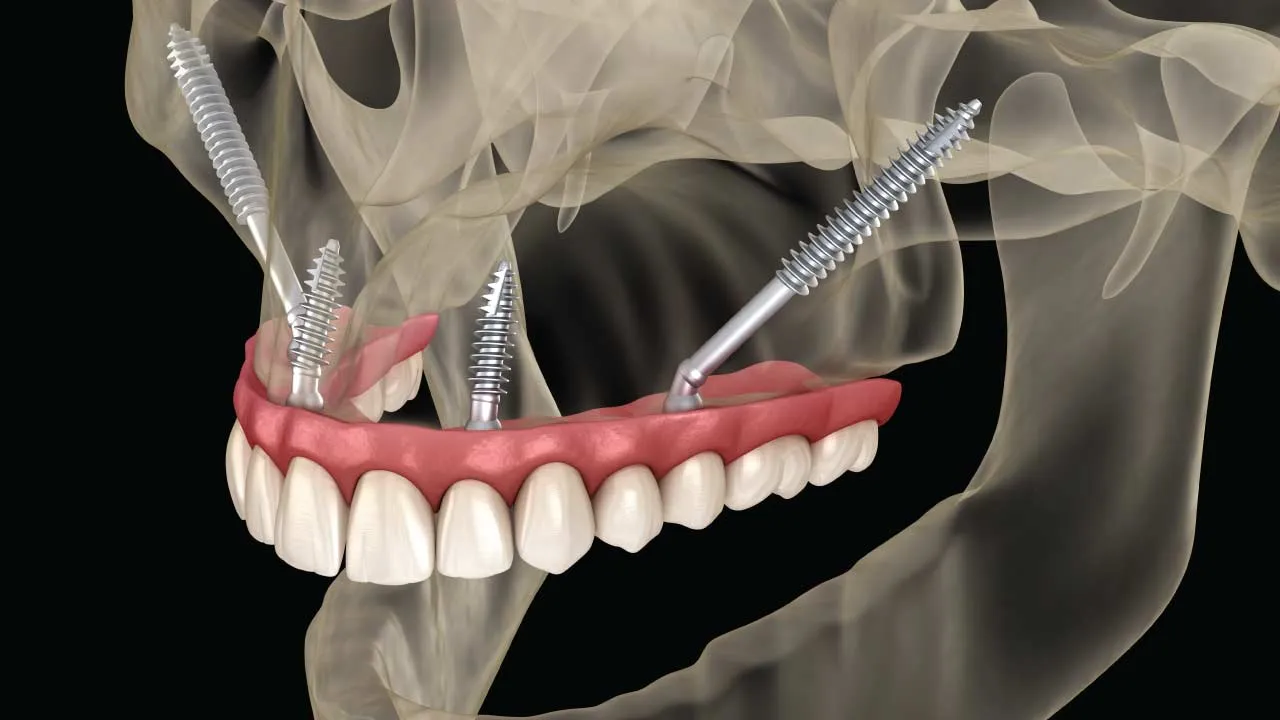
Severe bone loss in the upper jaw can make traditional dental implants difficult or even impossible without complex bone grafting procedures. In such cases, zygomatic implants offer an advanced and reliable solution for restoring missing teeth, especially in patients with significant upper jaw bone deficiency.
At Dr. Shyam Sundar’s Dental Implant Practice, patients with complex dental conditions receive advanced implant solutions focused on restoring function, aesthetics, and long-term oral health using modern surgical techniques.
What Are Zygomatic Implants?
Zygomatic implants are specialized dental implants that are longer than conventional implants and are anchored in the zygomatic bone (cheekbone) instead of the upper jawbone.
The zygomatic bone is:
- Dense
- Strong
- Less affected by bone loss
This makes it an ideal anchor point for patients with severe maxillary bone loss.
Why Are Zygomatic Implants Needed?
Traditional dental implants require sufficient jawbone for support. However, in some patients, the upper jawbone becomes too thin or weak due to:
- Long-term tooth loss
- Advanced periodontal disease
- Trauma or injury
- Failed previous implants
- Long-term denture use
- Bone resorption over time
In such cases, zygomatic implants eliminate the need for extensive bone grafting.
Who Is A Candidate For Zygomatic Implants?
Severe Upper Jaw Bone Loss
When there is insufficient bone for conventional implants.
Failed Dental Implants
Patients who have experienced previous implant failure due to poor bone support.
Long-Term Denture Users
Patients who struggle with loose or uncomfortable dentures.
Avoidance Of Bone Grafting
Patients who prefer to avoid multiple bone grafting surgeries.
Full Upper Jaw Rehabilitation Needs
Patients requiring complete restoration of upper teeth.
How Do Zygomatic Implants Work?
Unlike traditional implants that are placed in the jawbone, zygomatic implants are:
- Placed at an angle
- Anchored into the cheekbone (zygoma)
- Used to support fixed dental prosthetics
This provides a stable foundation even when upper jaw bone is severely deficient.
Advantages Of Zygomatic Implants
Avoids Bone Grafting
One of the biggest advantages is eliminating the need for bone graft procedures.
Immediate Function In Some Cases
In selected patients, fixed teeth may be placed soon after implant surgery.
Strong Stability
The zygomatic bone provides excellent support for implants.
Restores Full Smile Function
Patients can regain:
- Chewing ability
- Speech clarity
- Facial aesthetics
- Long-Term Solution
With proper care, zygomatic implants can provide long-lasting results.
Zygomatic Implants Procedure
Step 1: Detailed Evaluation
The dentist performs:
- Clinical examination
- CBCT scan (3D imaging)
- Treatment planning
Step 2: Treatment Planning
A customized surgical plan is created based on bone structure and oral condition.
Step 3: Surgical Placement
- Implants are placed into the cheekbone under anesthesia
- Additional conventional implants may also be placed in the front jaw area
Step 4: Temporary Teeth (If Applicable)
In some cases, temporary fixed teeth may be attached soon after surgery.
Step 5: Final Prosthesis
After healing, permanent fixed teeth are placed.
Recovery After Zygomatic Implant Surgery
Recovery varies from patient to patient but generally includes:
- Mild swelling
- Temporary discomfort
- Soft diet for a few days
- Gradual return to normal activities
Most patients adapt well with proper post-operative care.
Risks And Considerations
As with any surgical procedure, zygomatic implants may involve:
- Swelling or bruising
- Sinus-related complications (rare)
- Temporary discomfort
- Need for expert surgical skill
Choosing an experienced implant specialist significantly reduces risks.
Zygomatic Implants Vs Traditional Implants
Bone Requirement
- Traditional implants: Require sufficient jawbone
- Zygomatic implants: Do not require upper jaw bone grafting
Treatment Complexity
- Traditional implants: Simpler in suitable bone conditions
- Zygomatic implants: Advanced surgical technique
Suitable For
- Traditional implants: Mild to moderate bone loss
- Zygomatic implants: Severe bone loss cases
Aftercare For Zygomatic Implants
Maintain Oral Hygiene
- Brush twice daily
- Use prescribed mouth rinses
- Clean implant-supported teeth carefully
Follow Dental Checkups
Regular follow-ups ensure implant stability and gum health.
Avoid Smoking
Smoking may affect healing and implant success.
Eat Soft Foods Initially
Helps during early healing phase.
How Successful Are Zygomatic Implants?
When performed by experienced specialists, zygomatic implants have high success rates and provide stable long-term results for patients with severe bone loss.
Success depends on:
- Surgical expertise
- Bone quality
- Patient oral hygiene
- Regular follow-ups
Who Should Perform Zygomatic Implant Surgery?
This procedure requires advanced training in:
- Oral and maxillofacial surgery
- Implant dentistry
- Complex bone reconstruction
It should always be performed by experienced implant surgeons.
When Should You Consider Zygomatic Implants?
You should consult a specialist if you:
- Have been told you lack sufficient bone for implants
- Wear loose or uncomfortable dentures
- Have failed previous implant treatments
- Want fixed teeth but cannot undergo bone grafting
Early evaluation can help determine the best treatment option.
Conclusion
Zygomatic implants offer a highly effective solution for patients with severe upper jaw bone loss, eliminating the need for bone grafting and restoring full dental function with stable, long-term results. With advanced surgical planning and proper care, they can significantly improve quality of life and oral health.
At Dr. Shyam Sundar’s Dental Implant Practice, patients receive expert evaluation and advanced implant solutions tailored for complex dental conditions, ensuring functional and aesthetic rehabilitation of the smile.
Frequently Asked Questions
Q: What are zygomatic implants?
A: They are long dental implants anchored in the cheekbone for patients with severe upper jaw bone loss.
Q: Who needs zygomatic implants?
A: Patients with severe bone loss in the upper jaw or those unsuitable for traditional implants may need them.
Q: Is bone grafting required for zygomatic implants?
A: No, one of the main advantages is that bone grafting is usually not required.
Q: Are zygomatic implants painful?
A: The procedure is done under anesthesia, and post-surgical discomfort is usually manageable.
Q: How long do zygomatic implants last?
A: With proper care and maintenance, they can last many years.
Q: Can I get fixed teeth after zygomatic implants?
A: Yes, in many cases, fixed teeth can be provided after or shortly following surgery depending on the treatment plan.

From Scan to Smile — The Innovative Implantium Workflow
Watch your full implant journey unfold, starting with the first scan and ending with your new confident smile.
Proudly serving our community,
Dr. Shyam Sundar combines compassionate care, advanced technology, and trusted expertise for every smile.
Call Us: +91 9886580804 or +91 8073952005


©2026 | Dr. Shyam Sundar | All rights reserved | Digital Marketing by Remedo